Rond
Rond
 Organisch Rond
 Vierkant
 Ovaal
Ovaal
 Deens Ovaal Recht
 Deens Ovaal Rond
 Half Ovaal
 Plat Ovaal
 Rechthoek
 Kiezel
 Organisch
 Boomstamrand
Oak Herringbone Dining Table - Custom Handcrafted Pattern
Oak Herringbone Dining Table — Custom Crafted Pattern
An oak herringbone dining table is not just any table — it's craftsmanship you see every day. The herringbone pattern, also known as "herringbone," is a classic handcrafted pattern where narrow wooden slats are laid diagonally to each other in an arrow shape. The result is a tabletop with a rich, three-dimensional appearance that elevates any dining room. It fits perfectly with the current Japandi and slow living trends — warm materials such as oak and smoked oak are central to today's interior design.
What Makes the Herringbone Pattern Special?
The herringbone pattern gets its name from its resemblance to fish bones. The slats are laid at a 45° angle, alternating direction, creating a repetitive but never boring pattern. Compared to a regular oak top:
- More visual depth — The diagonal lines make the top appear more vibrant and rich.
- Artisan value — Herringbone requires more craftsmanship than a standard plank top. You can see the difference.
- Character — Each herringbone top is slightly different due to the natural grain of the oak.
- Timeless — The herringbone pattern is centuries old and never goes out of style.
Difference from Regular Oak
A regular oak tabletop consists of planks laid parallel to each other. This creates a sleek, calm look. A herringbone top consists of smaller slats laid in a zigzag pattern. This provides:
- More movement and dynamism in the surface
- A warmer, more artisanal feel
- More processing time and craftsmanship in the production process
- Typically a higher visual value per m²
How is a Herringbone Tabletop Made?
The production process of a herringbone oak tabletop requires more time and care than a standard top:
- Selection — Oak slats are selected based on color, grain, and quality.
- Cutting — The slats are cut to the correct angle and length.
- Laying — The slats are laid in the herringbone pattern and glued to a stable backing board.
- Pressing — The top is pressed for maximum adhesion.
- Sanding and finishing — The top is sanded multiple times and finished with oil, stain, or varnish.
Available Finishes
All oak finishes are also available on a herringbone top:
- Natural oiled — the popular choice
- natural — for a dark, deep look
- White or grey stained — for a Scandinavian style
- Black stained — modern and powerful
Combinations
An oak herringbone table combines particularly well with:
- Slim metal legs or — The rich top calls for a modest base that doesn't distract attention.
- Upholstered chairs in neutral colors — Grey, natural, or olive green look beautiful with the warm oak.
- Concrete look or herringbone floor — A true ode to craftsmanship on both the floor and the tabletop.
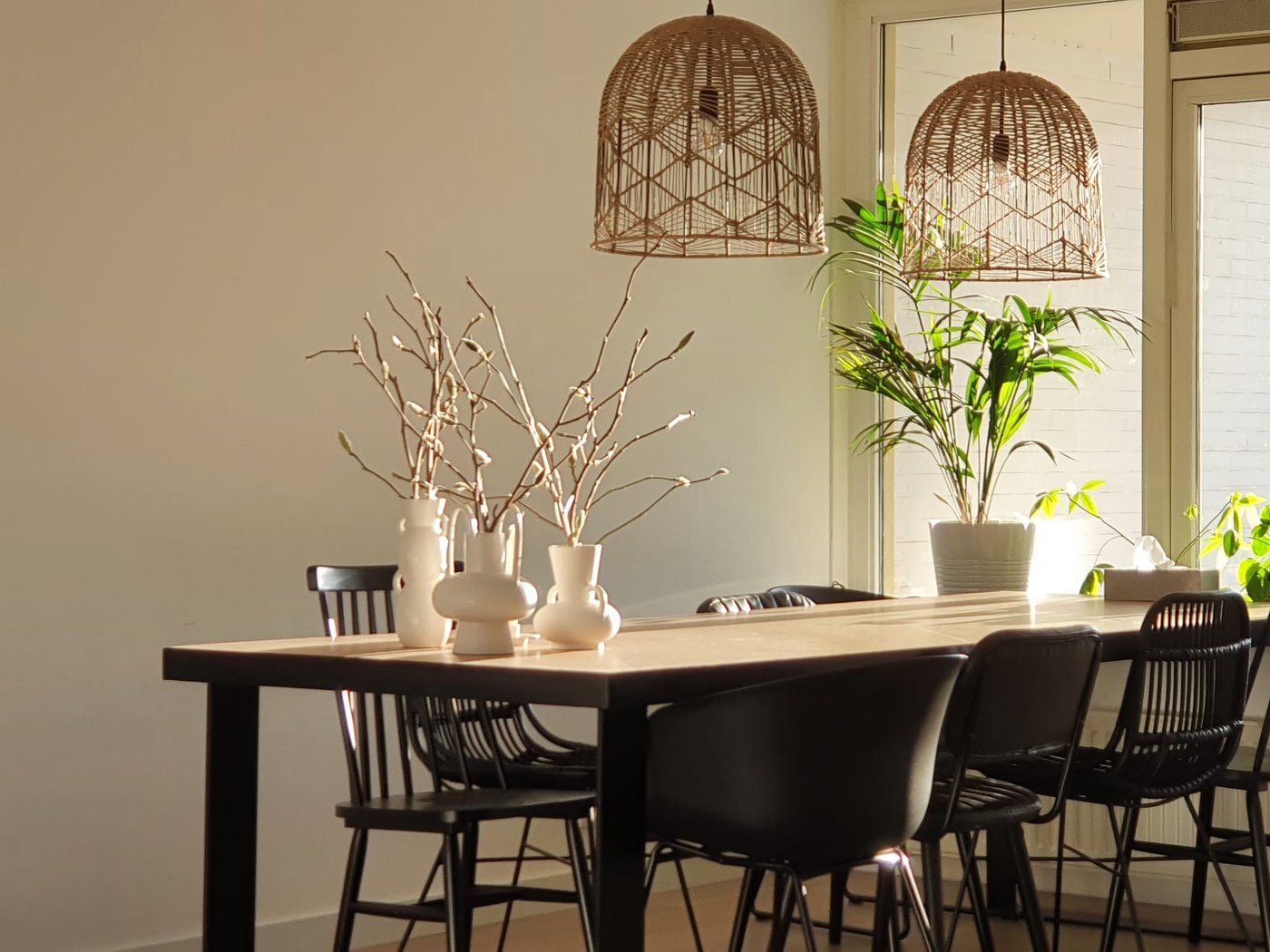
- Rattan or woven lamps — Organic material above the table enhances the artisanal feel.
Sizes and Price
We produce custom oak herringbone tables from 120 cm to 300 cm. Due to the extra processing, a herringbone top is on average 20-30% more expensive than a comparable standard oak top. Prices start from €950. Delivery time: 7-10 weeks.
Frequently Asked Questions
Is a herringbone table more difficult to maintain than a regular oak table?
No. Maintenance is the same as a standard oak table: oil 1-2 times a year, immediately remove liquids, and protect from prolonged direct sunlight.
Can the herringbone pattern also be made in other wood types?
Yes. We also produce herringbone in walnut for a more luxurious, darker result. Contact us for more options.
Is a herringbone top as strong as a regular oak top?
Yes. Due to the layered construction with a backing board, a herringbone top is structurally stable and strong.
Can I combine a herringbone floor with a herringbone table?
You certainly can. Make sure to vary the finishes (e.g., matte table, glossy floor) to prevent the overall look from becoming too busy.
How long does it take to produce a herringbone table?
Due to the extra processing, we estimate 8-10 weeks for herringbone table production.
Herringbone Dining Table in Your Interior
A herringbone oak table commands attention — but also considers it. The pattern is rich without being loud. The wood is warm without being soft. A herringbone table looks best in an interior that allows the furniture to speak. Keep the rest of the decor relatively calm: neutral colors, simple shapes, no busy patterns on the floor or walls.
Combining the herringbone pattern with a patterned floor? Ensure sufficient contrast: a herringbone table on a cast floor works perfectly, as does one on a concrete-look or large tiles. Avoid combining it with a floor in the same pattern on the same scale — that creates a cluttered effect.
Sizes and Customization
We produce herringbone oak tables from 140 cm to 300 cm in length. The width is freely adjustable. Round and oval herringbone tables are also possible, although this requires additional processing time and a surcharge. Contact us for a personalized quote for special shapes.
The herringbone pattern can also be combined with a steel edge (frame) around the top for an extra industrial effect. This also protects the edges of the top.
Related pages:
Design your dining table directly — choose material, shape, and size
Currently trending in interior design
This product perfectly fits current interior trends: smoked oak, wabi-sabi, japandi, slow living, biophilic, organic shapes. Solid wood, organic shapes, and slow living design are central — furniture that is not only beautiful but lasts for generations. The combination of robust craftsmanship with timeless design makes this a long-term investment.
Currently trending in interior design
This product perfectly fits current interior trends: fenix, bouclé, cane. Solid wood, organic shapes, and slow living design are central — furniture that is not only beautiful but lasts for generations. The combination of robust craftsmanship with timeless design makes this a long-term investment.
Buying Guide: Choosing the Right Dining Table
| Number of people | Minimum length | Recommended length |
|---|---|---|
| 4 people | 140 cm | 160 cm |
| 6 people | 180 cm | 200 cm |
| 8 people | 220 cm | 240 cm |
| 10 people | 260 cm | 280-300 cm |
- Space around the table: allow at least 90 cm of free walking space on all sides — 75 cm is the absolute minimum.
- Standard table height: 75-78 cm. Combine with chairs of 43-47 cm seat height.
- Width: at least 80 cm for comfortable seating opposite each other, 90-100 cm is ideal.
- Per person: allow 60-70 cm of table length per person — 70 cm provides elbow room.
Frequently Asked Questions
What is a herringbone pattern on an oak dining table?
The herringbone pattern (also known as Hungarian point or chevron) consists of rectangular planks laid side-by-side in a V-shape (45°). It gives the tabletop a dynamic, exclusive appearance while still being made of solid oak.
What is the difference between herringbone and chevron?
Herringbone has planks that lie completely in a zigzag pattern. Chevron (Hongaarse punt) has planks that meet at an exact point to form a V-shape. Chevron looks neater.
Is a herringbone dining table more expensive than a regular oak table?
Yes — the herringbone pattern requires precise cutting and more labor. Expect 20-40% more than a comparable straight oak tabletop.
How do I maintain a herringbone oak tabletop?
The same as normal oak: oil 1-2 times a year. Pay extra attention to the joints between the planks — ensure they remain well filled to prevent moisture penetration.
Which base suits a herringbone oak table?
Black steel table legs or industrial bases allow the herringbone top to stand out best. The pattern calls for a calm, sleek base.
What sizes are available for a herringbone oak dining table?
Standard 180×90 cm (6-8 people) and 220×100 cm (8-10 people). Customization is possible via our configurator.
Echt bij onze klanten thuis
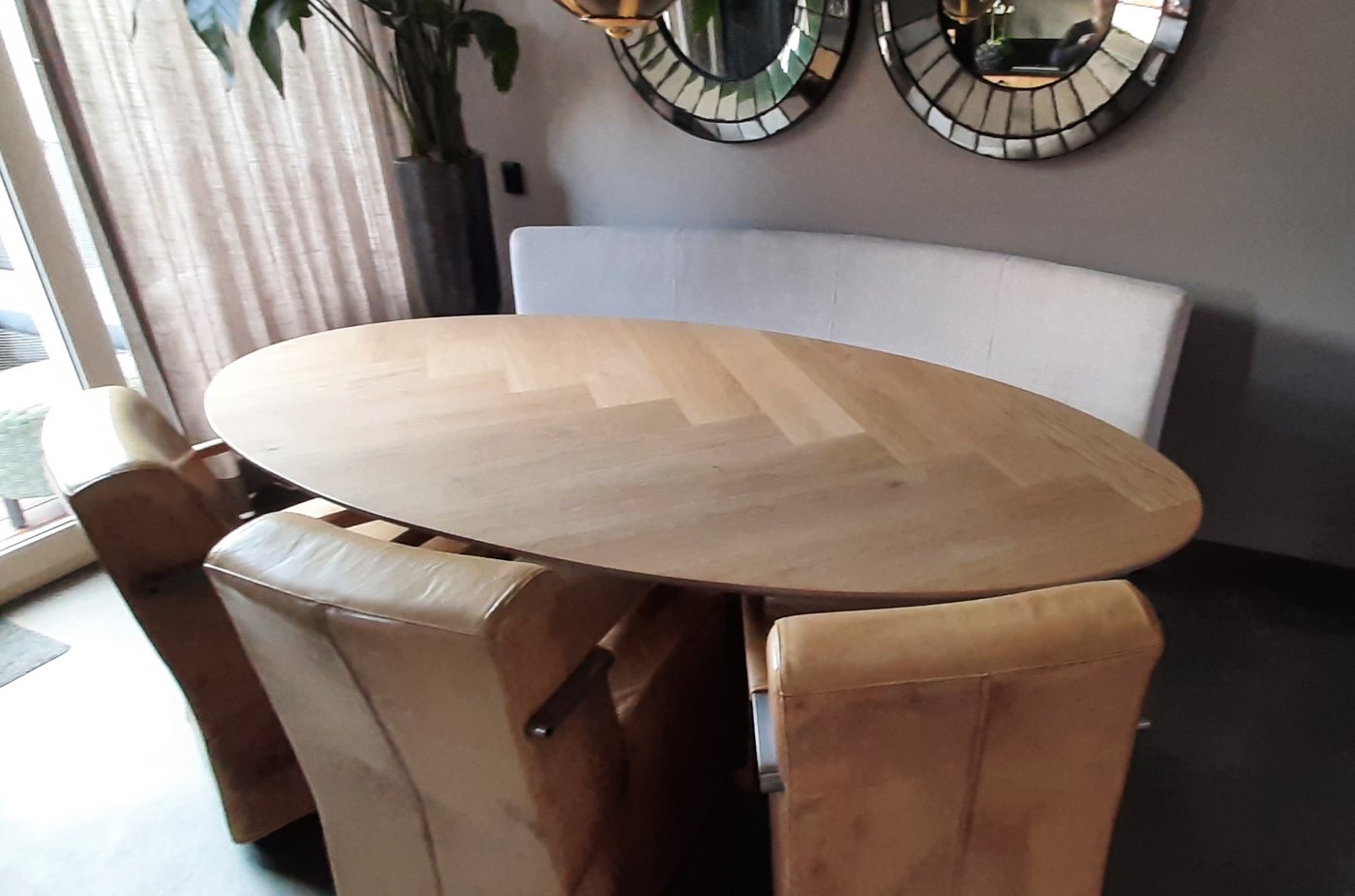
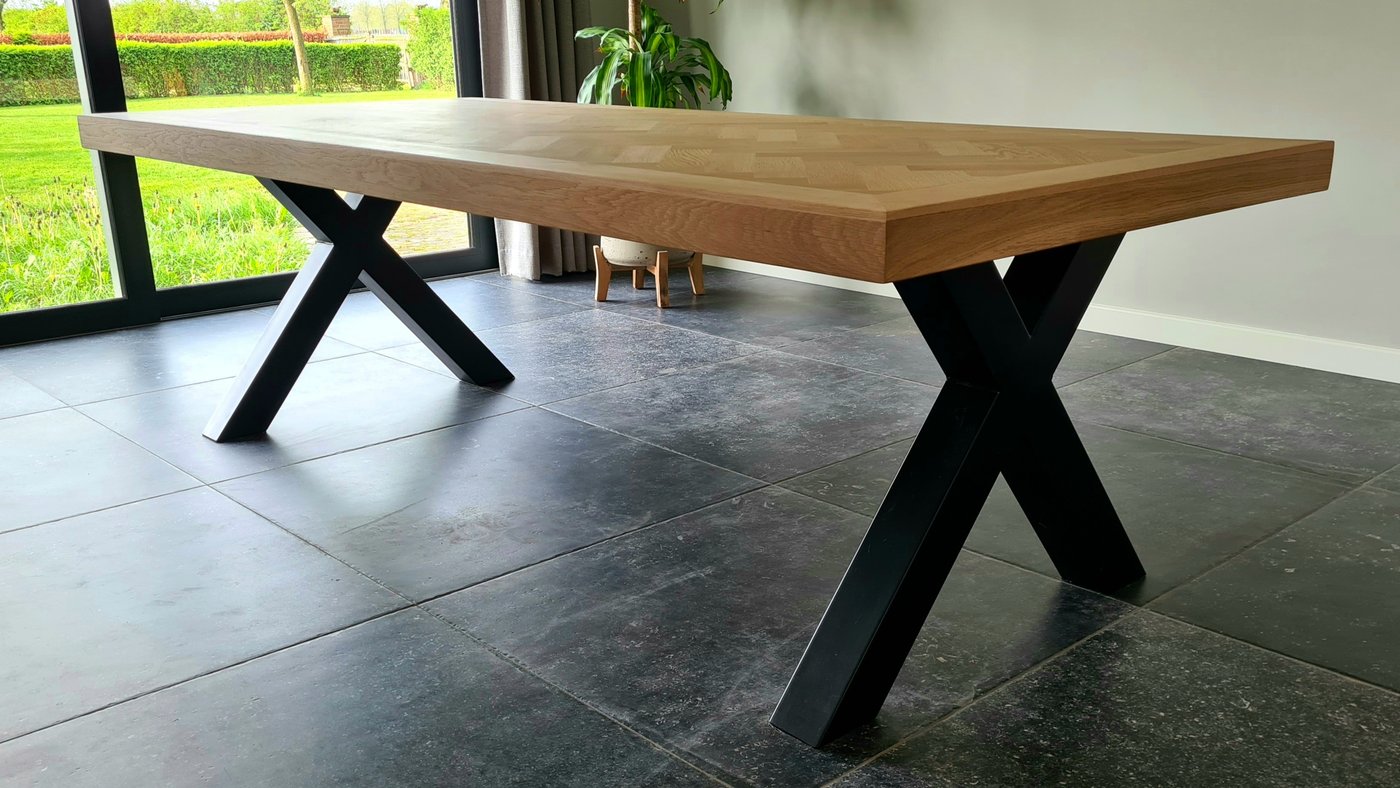
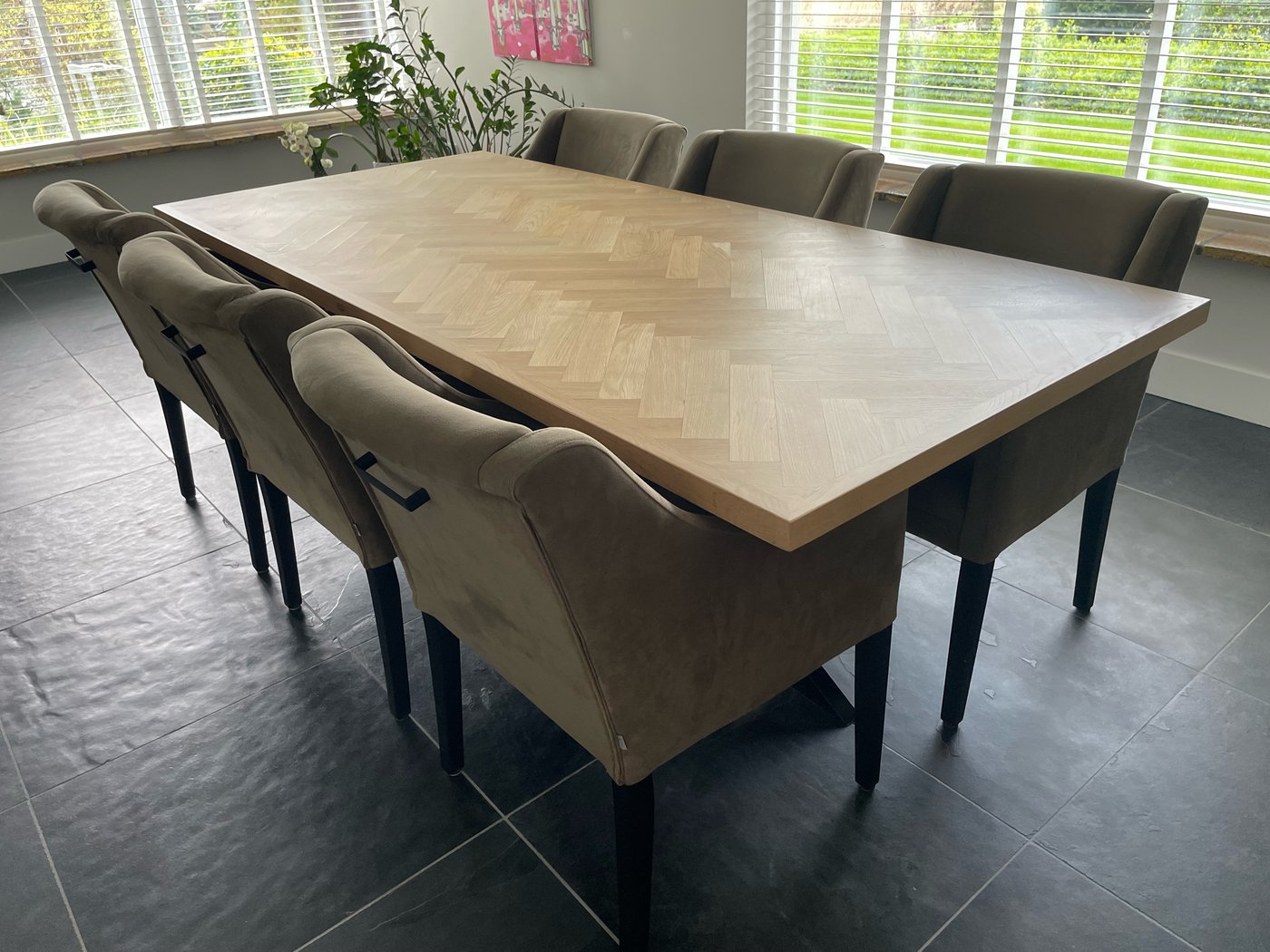
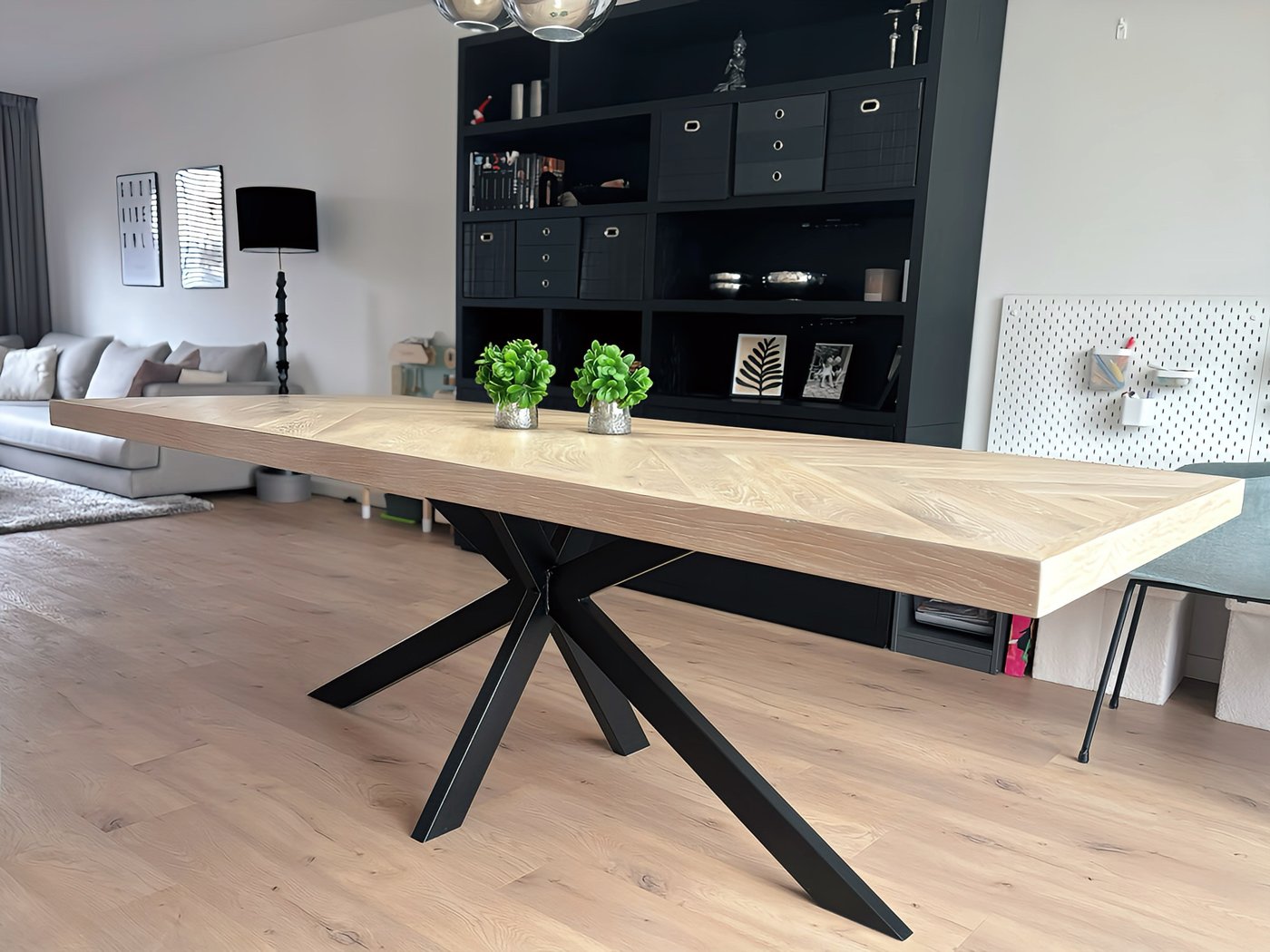
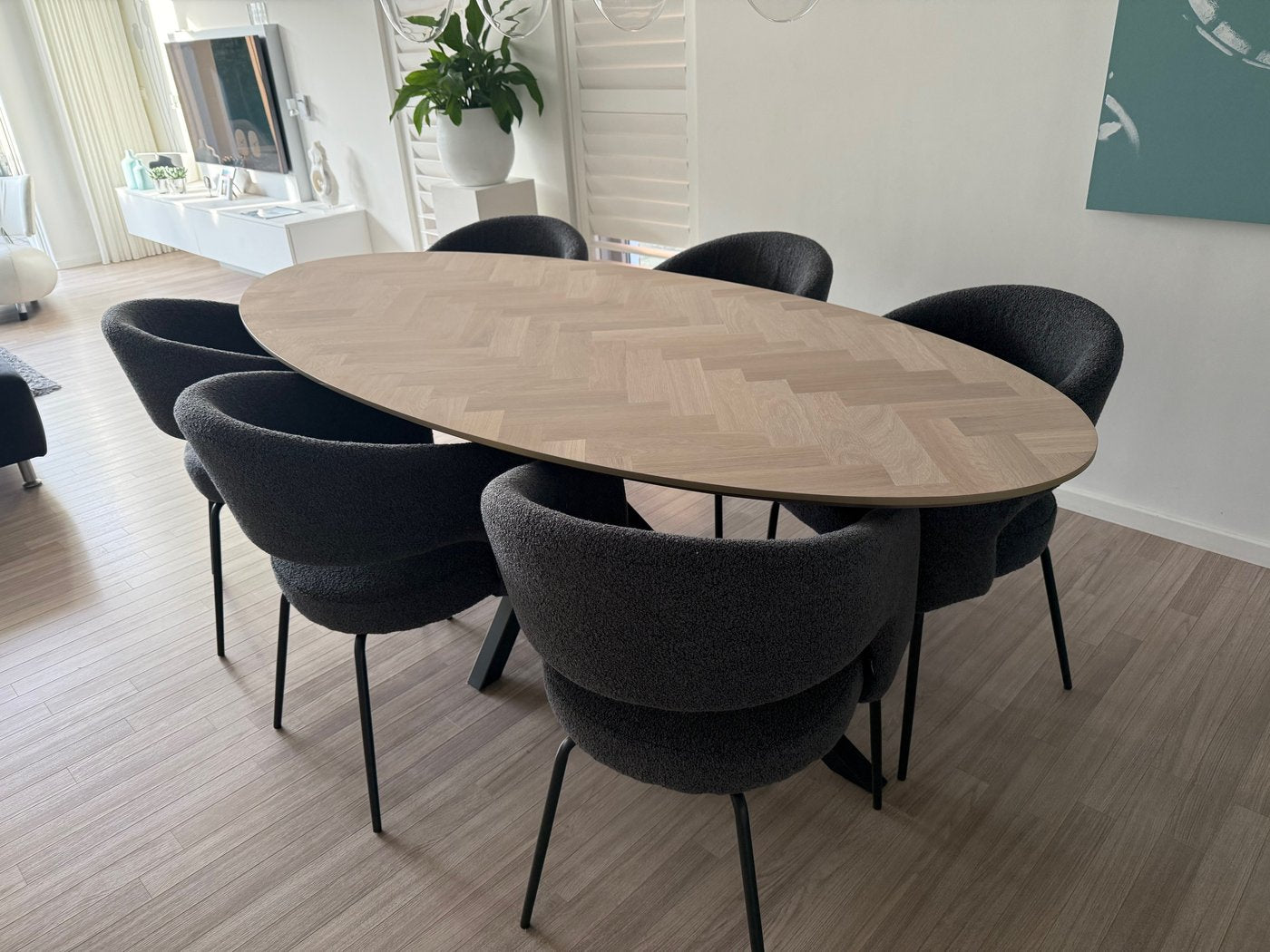
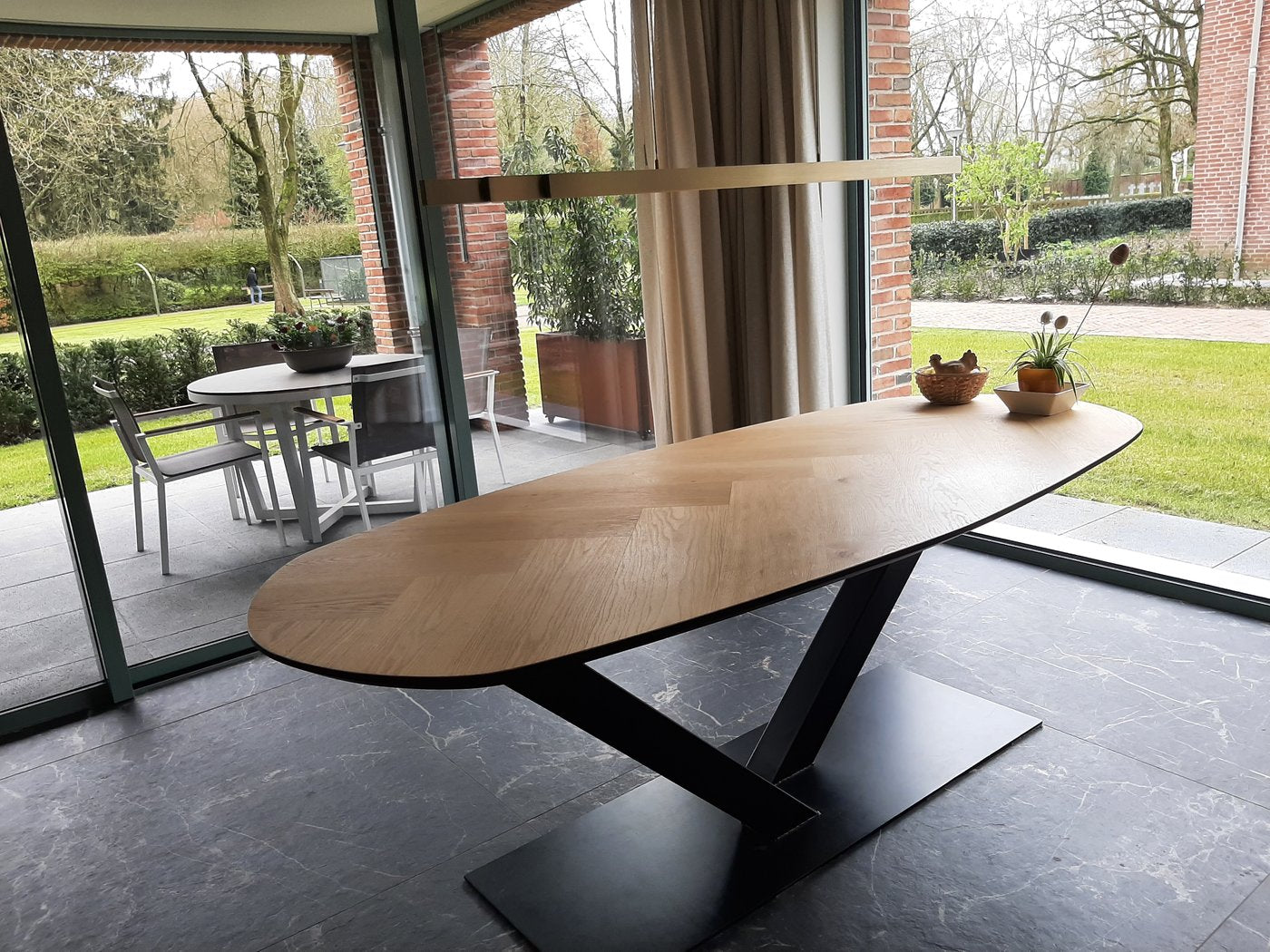
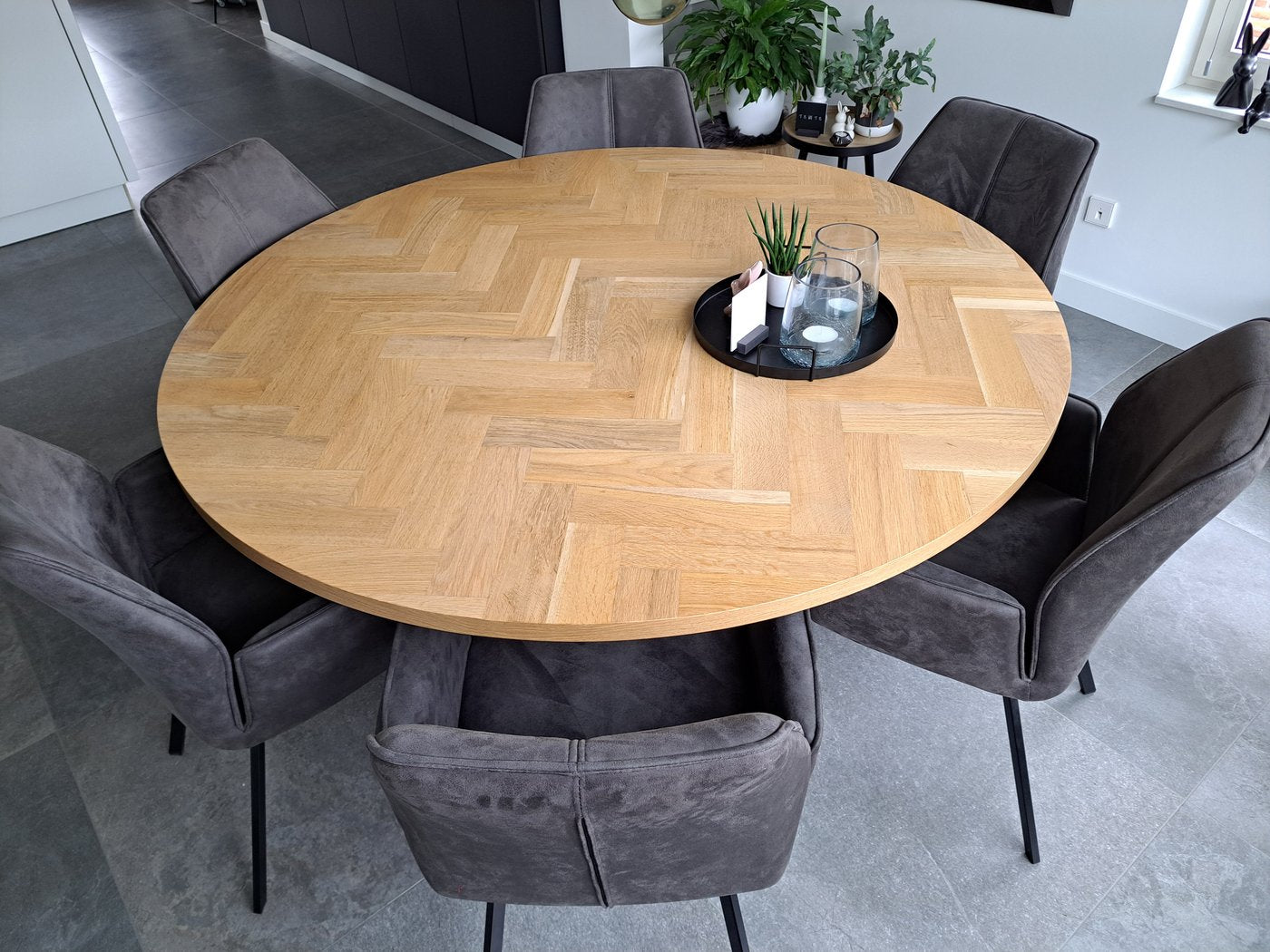
Visgraat eettafels bij onze klanten
Echte eettafels op maat van Industrial Home, bij onze klanten in huis.