Skip to content

Cart

Your cart is empty

Japandi Dining Table — Tranquility, Refinement & Craftsmanship | Industrial Home

Japandi Dining Table — Tranquility, Refinement & Craftsmanship

✓ Custom made ✓ Submit your own design ✓ Solid wood & natural materials ✓ Free delivery NL, BE & DE

A Japandi dining table is the embodiment of two of the world's most influential design philosophies: Japanese minimalism and Scandinavian warmth. The word "Japandi" is a portmanteau of Japan and Scandinavia and describes a design style that combines the best of both worlds — the clean, meditative calm of Japanese wabi-sabi with the cozy, functional beauty of Scandinavian design. The result is a dining table that feels both serene and warm, that is both functional and sculptural, and that becomes more beautiful with age rather than outdated.

What is Japandi Style?

Japandi as an interior style originated from the shared values of Japan and Scandinavia. Both cultures cherish simplicity, functionality, craftsmanship, and a deep respect for natural materials. In Japan, this principle is called wabi-sabi: the beauty of the imperfect, transient, and incomplete. In Scandinavia, they speak of hygge (Danish) or lagom (Swedish): coziness, balance, and the feeling of just enough. A Japandi dining table combines these philosophies in a piece of furniture that exudes tranquility without being cold, that is sleek without being stark.

The characteristics of Japandi design are easily recognizable:

  • Low, horizontal lines: Japandi dining tables are often slightly lower than standard dining tables (72–75 cm instead of the usual 75–77 cm), making them appear closer to the ground and giving them an earthy, calm character.
  • Natural wood as the main material: natural oak, walnut, and lightly stained wood dominate. The grain of the wood is always visible — it is a quality, not a flaw.
  • Clean shapes without ornamentation: no elaborate decorations, no turned legs, no baroque details. Everything that is not functional has been removed.
  • Neutral color palette: white, beige, sand, light grey, warm browns — colors that do not compete for attention but work together for tranquility.
  • Visible craftsmanship: the joints are honest, the wood may show knots and grain variations, the legs are hand-planed.

Materials for a Japandi Dining Table

Natural Oak

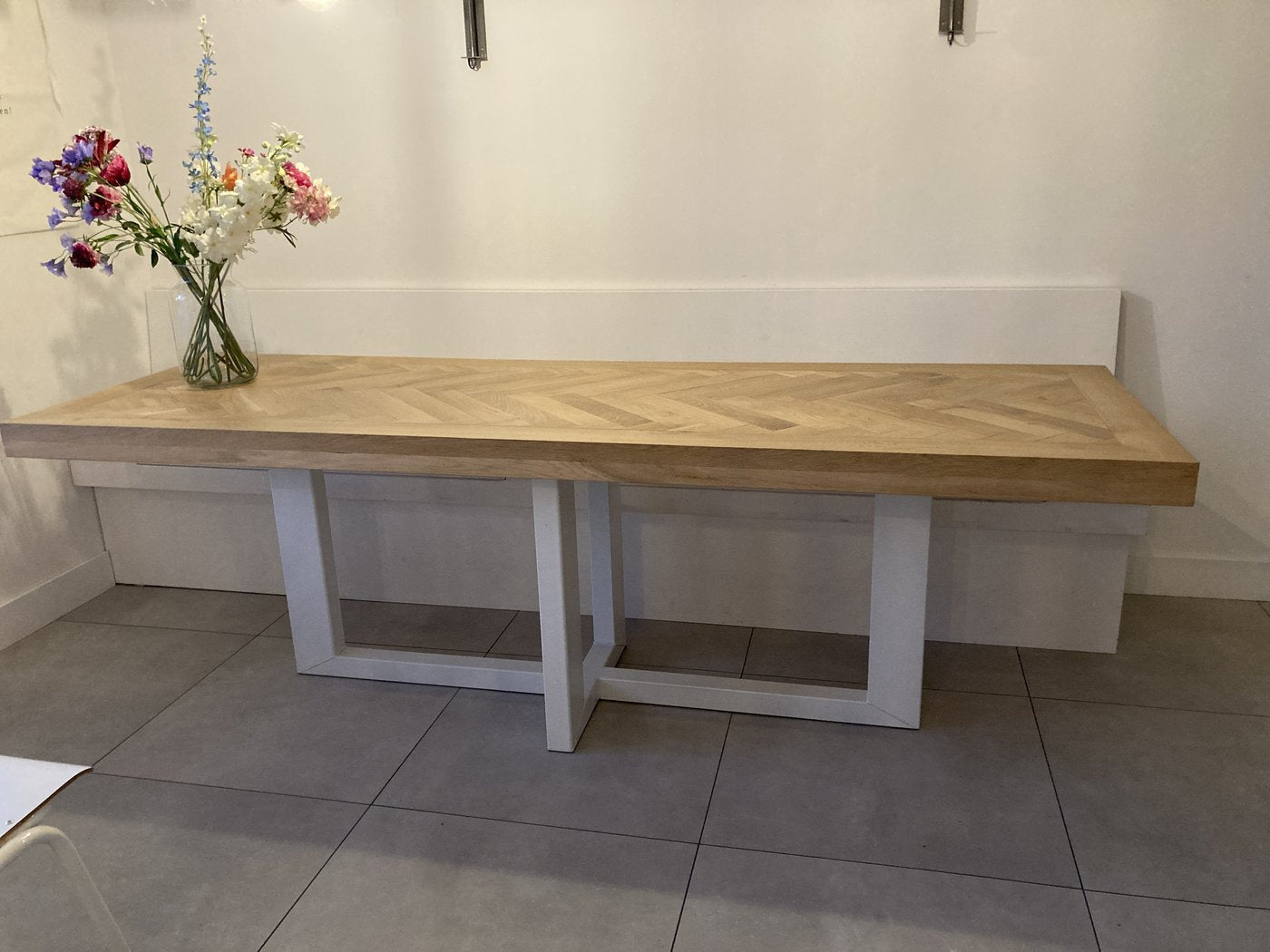
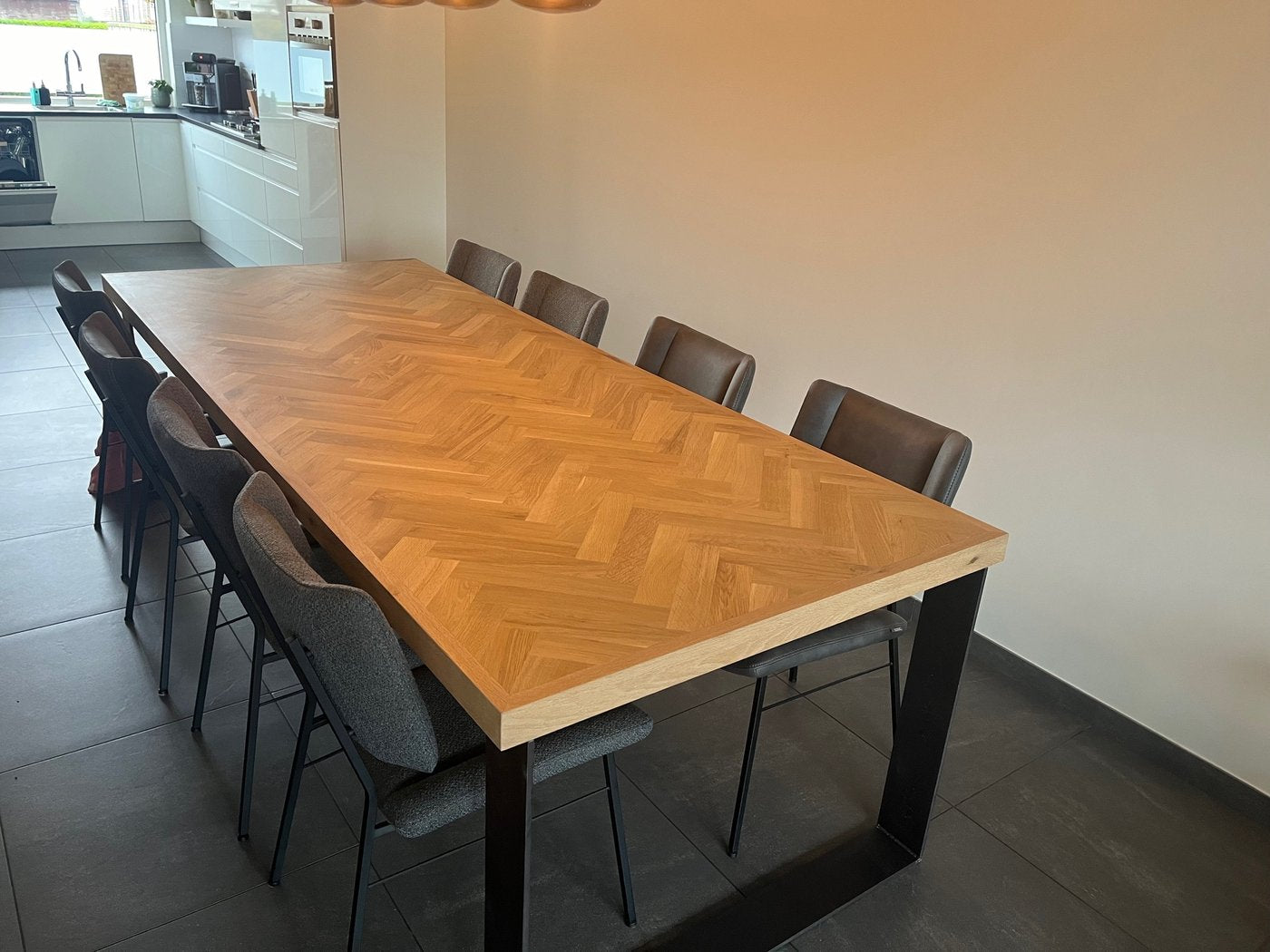
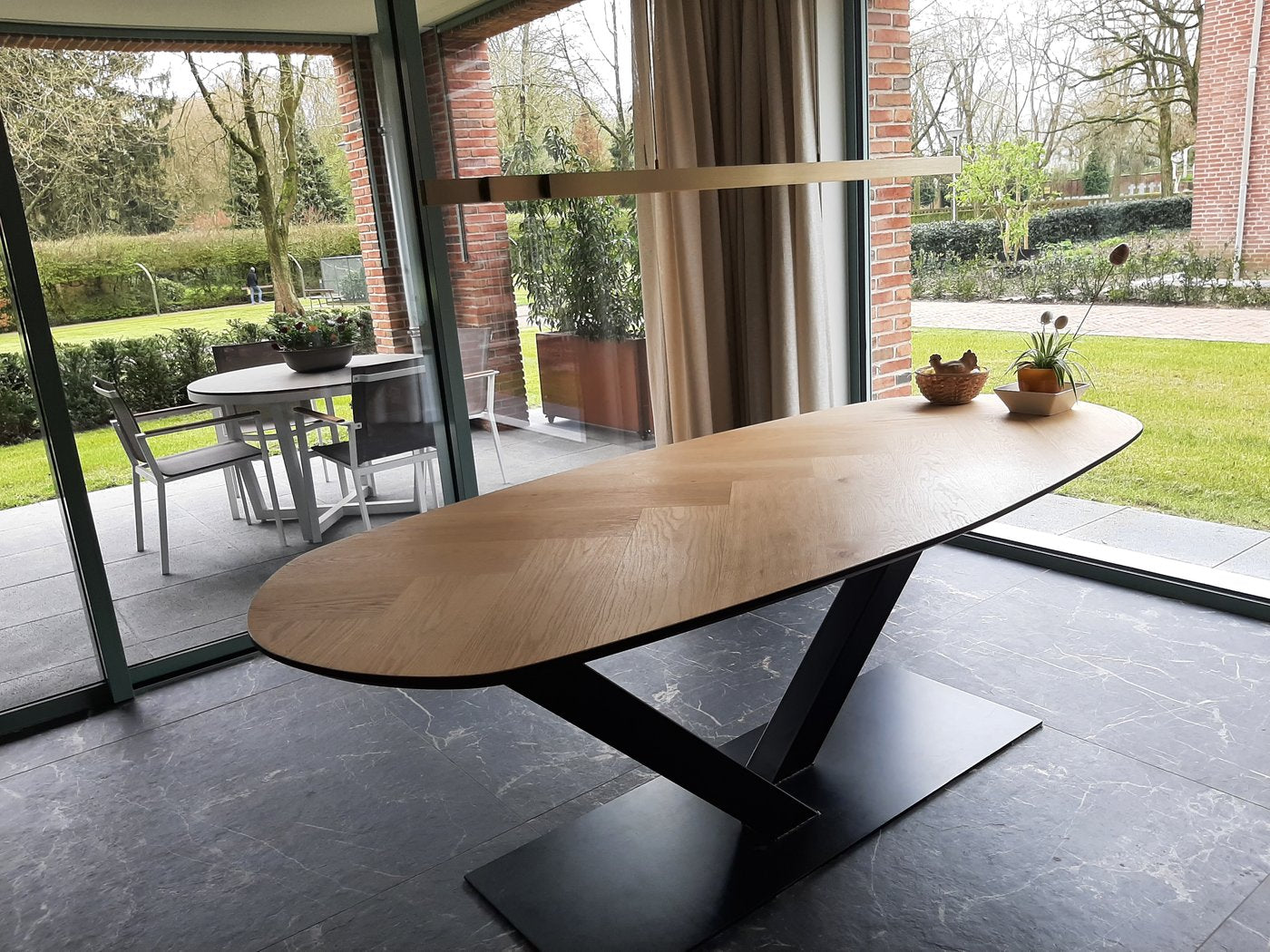
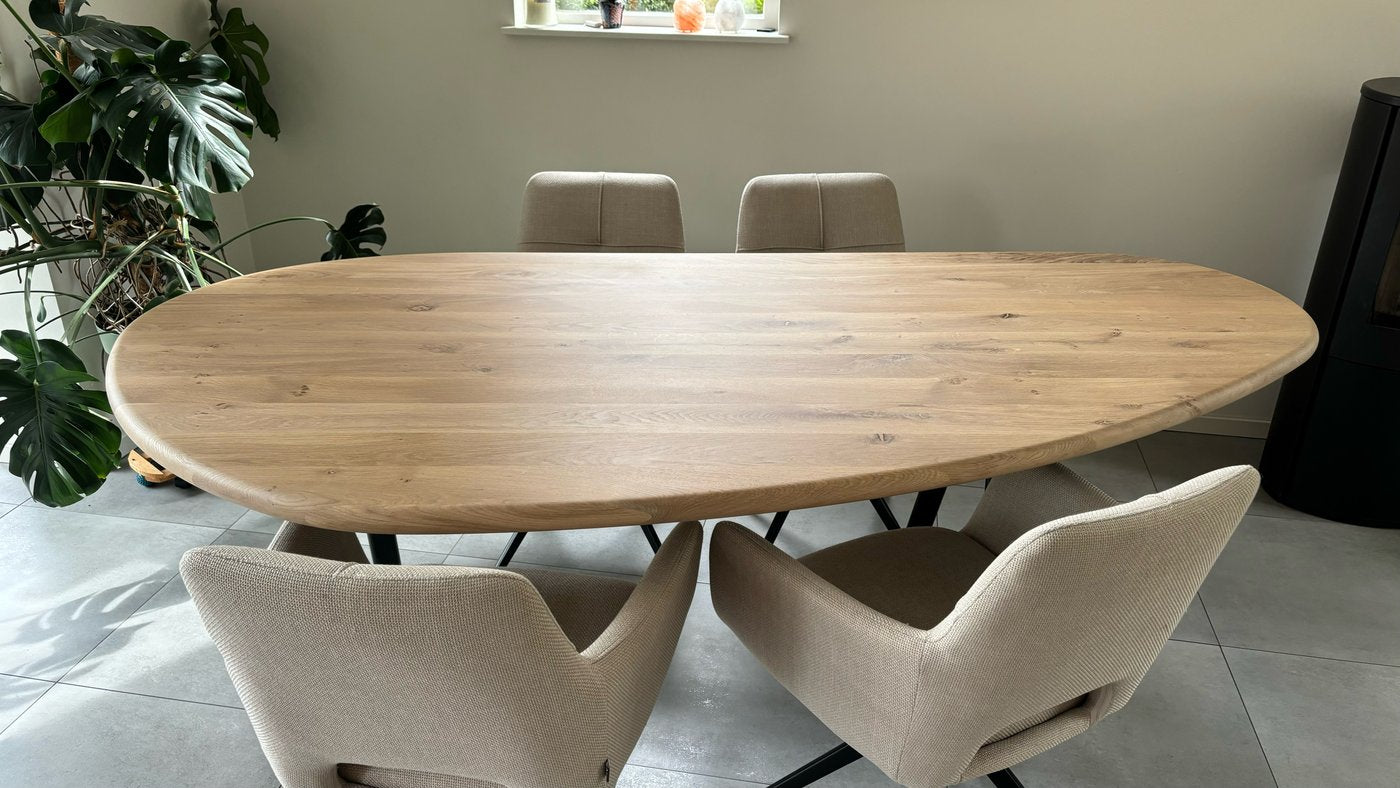
Natural oak is the most popular wood type for Japandi dining tables. The warm, creamy-yellow color of untreated oak perfectly matches the Japandi color palette. The open grain gives the top texture and depth without being aggressive. Oiled oak retains its color and character for decades; it becomes richer in color as it ages. A natural oak Japandi dining table on angled, slender legs is the purest execution of the concept.

White Oiled Oak

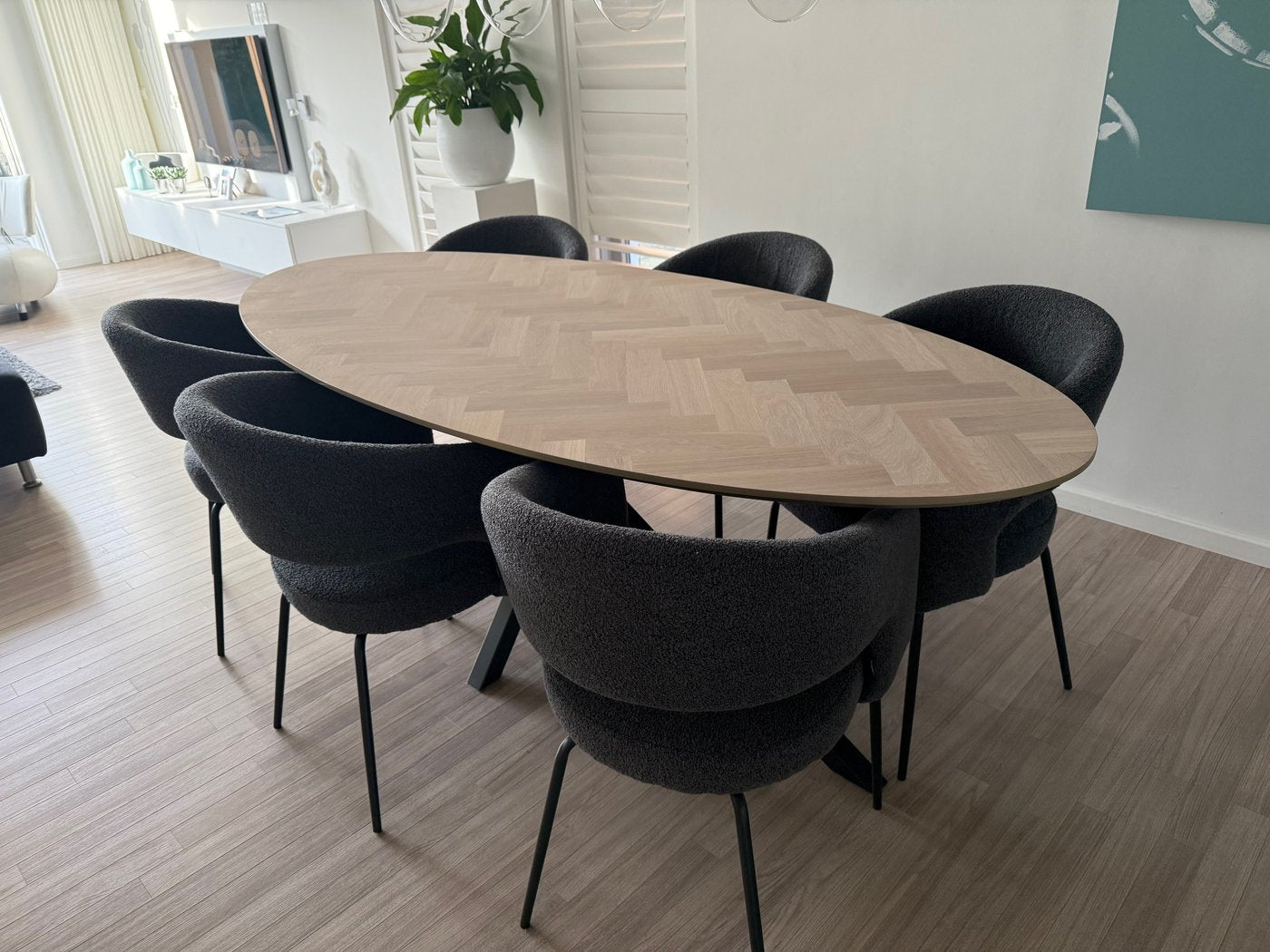
White oiled oak is oak treated with a white oil that opens up the wood structure and makes the color slightly paler. The wood loses its yellow tone and gets a cooler, lighter appearance without fading to the grey of grey stained wood. White oiled oak is the most Scandinavian variant: clean, light, modern. In combination with a matte white or beige HPL top on a white oiled oak base, you achieve the most serene, meditative Japandi dining area.

Walnut

Walnut is the luxury variant for a Japandi dining table. The rich, chocolate-brown color and the deep, wavy grain give a walnut table a warm, sensually rich appearance that perfectly aligns with the Japanese wabi-sabi principle — the beauty of natural material in its fullest expression. A walnut Japandi dining table on solid walnut legs is a piece of furniture that transcends generations.

HPL White or Beige

For a Japandi dining table with a sleek, light top, HPL in off-white or warm beige is an excellent choice. The matte surface aligns with the Japandi aesthetic of understated luxury. Combined with an oak base, this combines the serene color of white with the warmth of natural wood — the core of Japandi design.

Shapes of a Japandi Dining Table

Japandi dining tables come in various shapes, each with its own character:

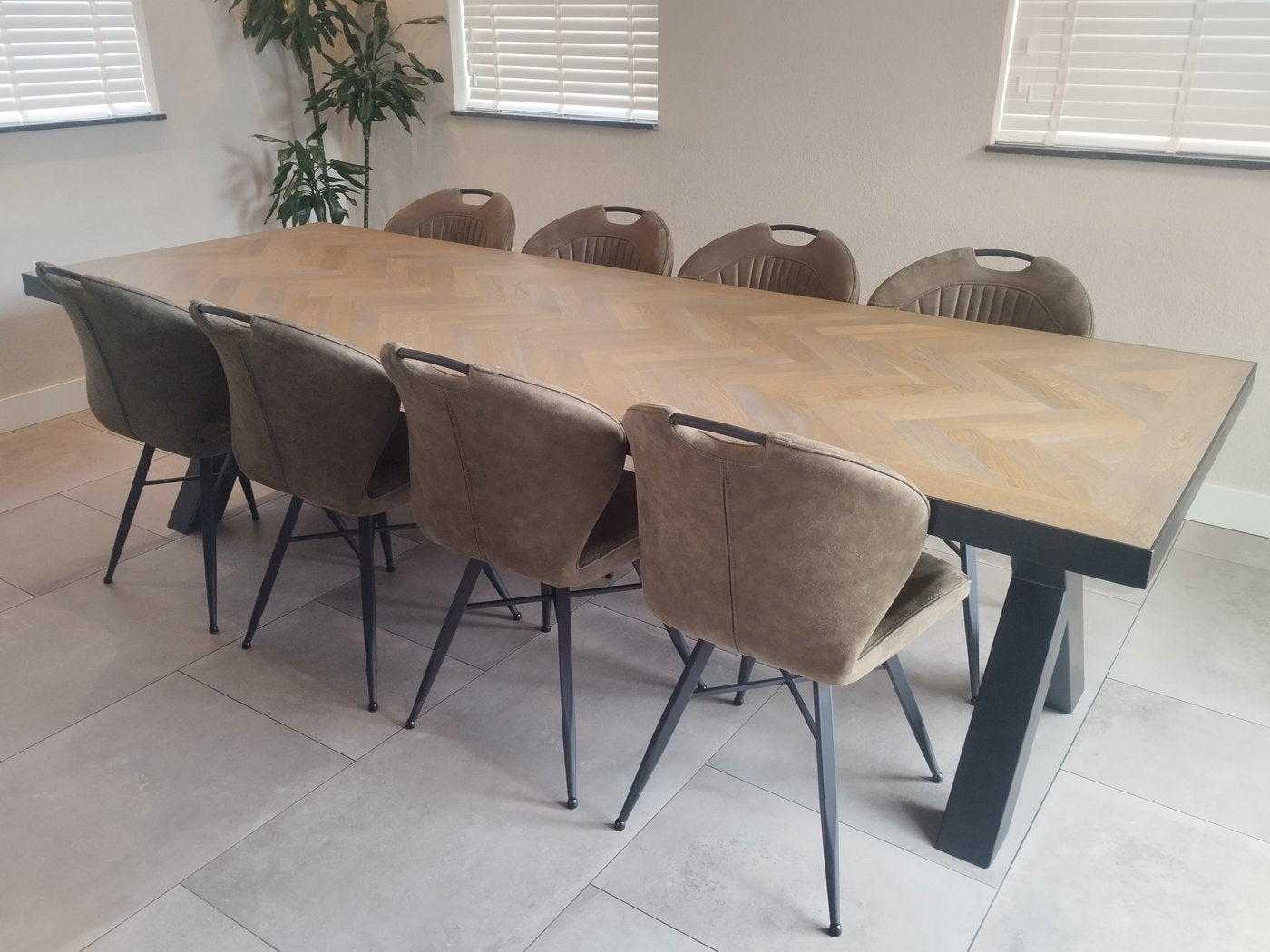
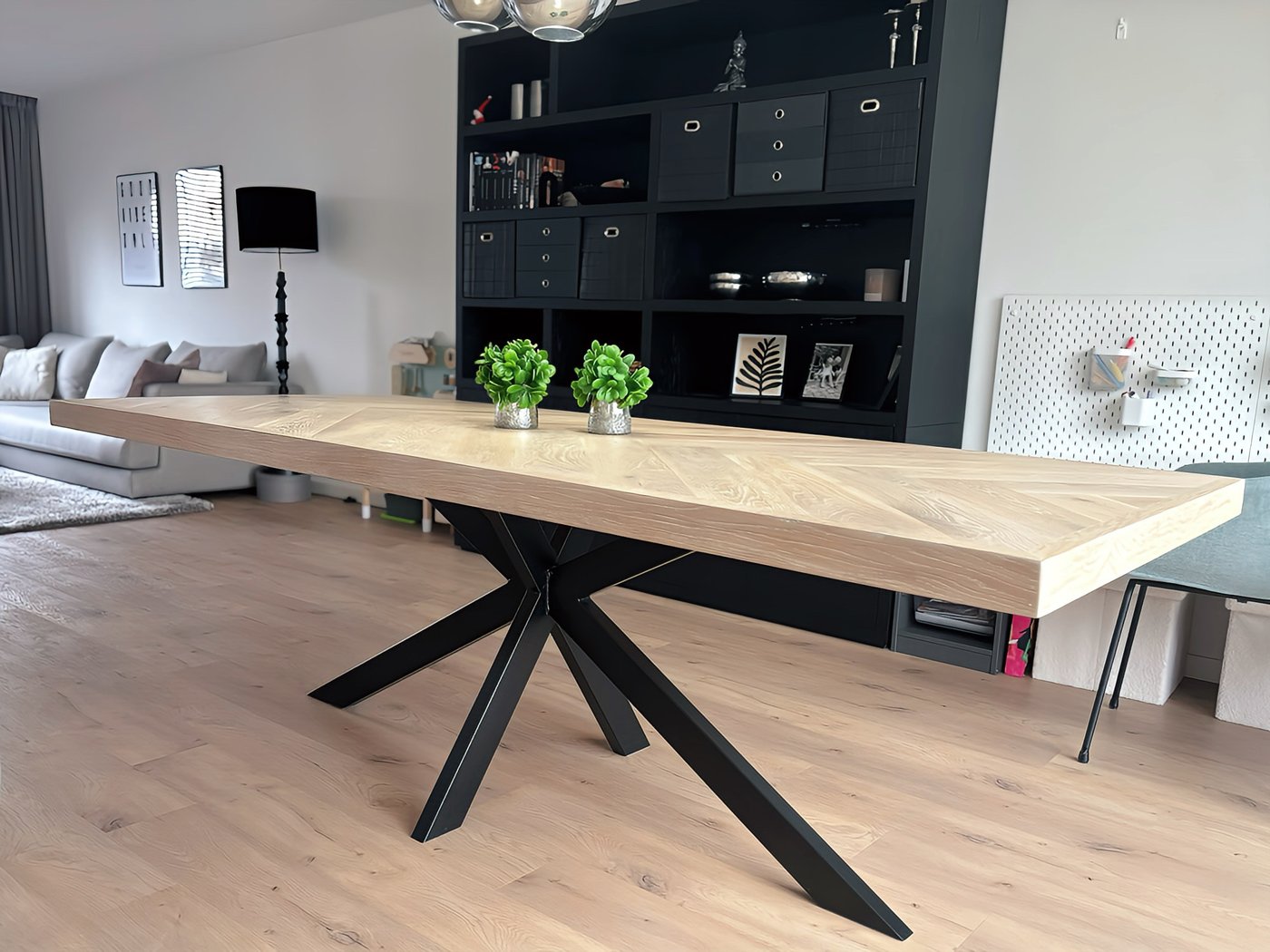
  • Rectangular: the most traditional Scandinavian shape. Long, low, with slender legs. Offers the most seating per surface area.
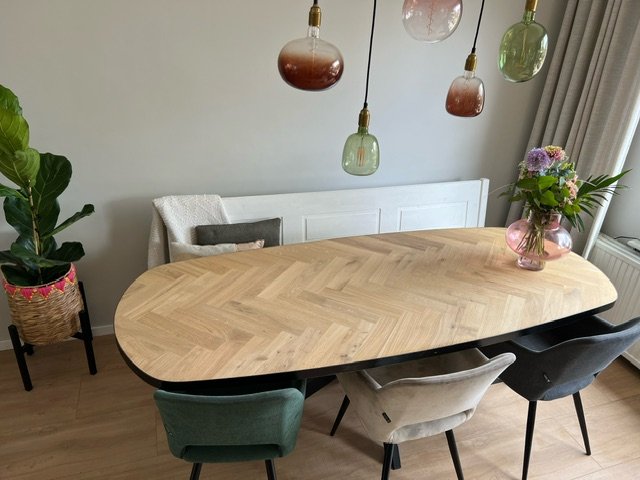
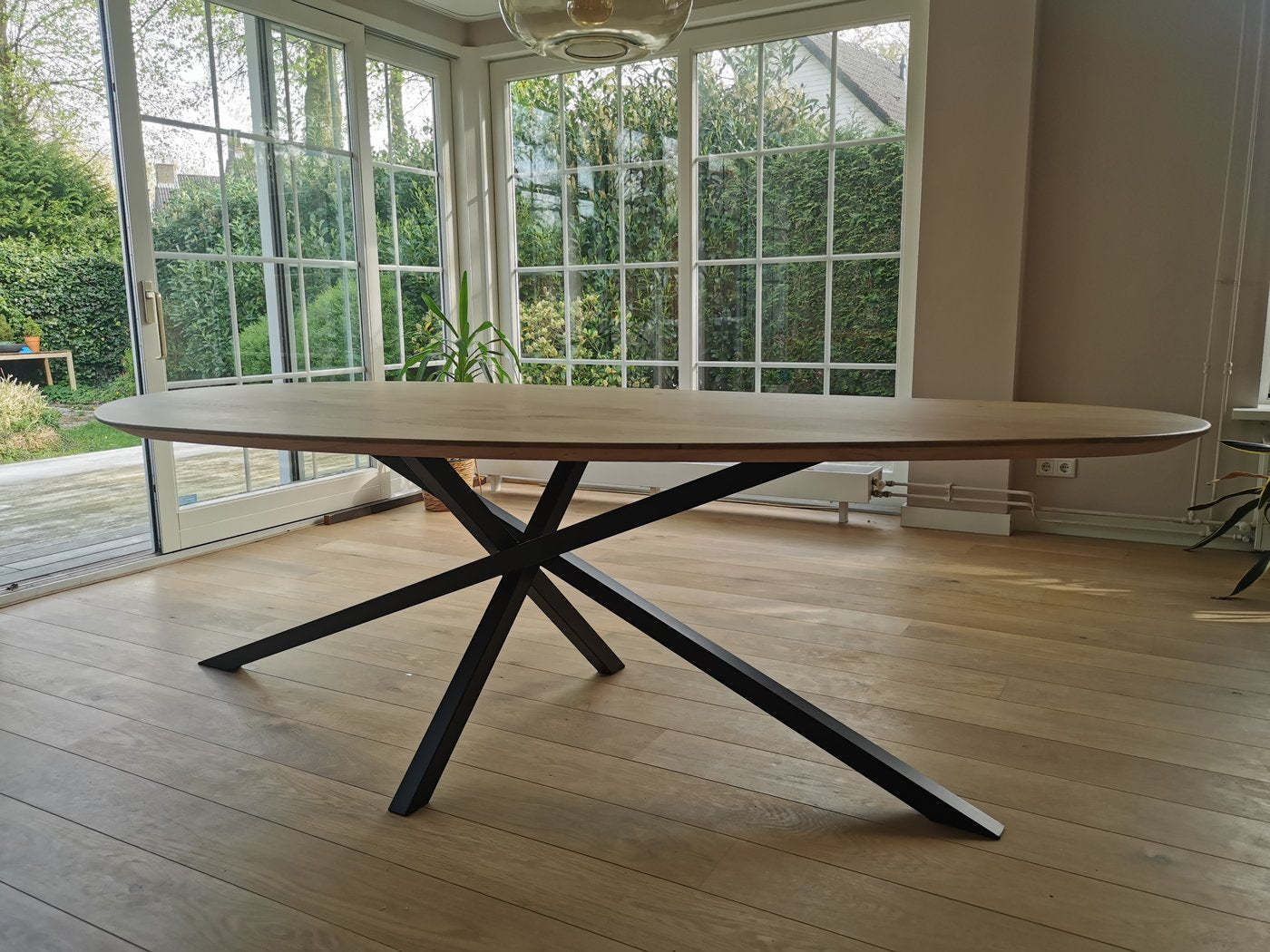
  • Oval: the most beloved Japandi shape. The oval table combines the length of rectangular with the softness of round — no sharp corners, an organic curve. This fits perfectly with the Japanese sense of roundness and harmony.
  • Round: a round Japandi dining table has a zen-like quality. No head, no distinction — everyone sits equally. Ideal for smaller groups (4–6 people).

Combinations: Japandi Chairs and Lamps

A Japandi dining table calls for carefully chosen accessories:

  • Chairs: choose chairs with slender wooden legs (oak or walnut) and upholstered seats in beige, natural linen, or soft grey fabric. Avoid chairs with a lot of ornamentation or brightly colored upholstery. A light Shaker-style chair or a simple Scandinavian dining chair fits perfectly.
  • Pendant lamp: a round pendant lamp in rattan or woven material above the Japandi dining table is the ideal choice. The natural material matches the wood types of the table; the round shape reflects the tranquility of the Japandi concept. A low, wide lampshade in beige or off-white bamboo is ideal.
  • Rug: a natural jute or wool rug under the table connects the elements of the dining area. Choose a rug in natural, sand, or light grey.
  • Table accessories: ceramic plates in matte earth tones, handmade cups, a small vase with one flower or branch. Less is more — wabi-sabi also means that an empty table is more beautiful than an overcrowded one.

Configurator: Your Custom Japandi Dining Table

At Industrial Home, you can fully customize your Japandi dining table using our 3D configurator. Choose your wood type (oak, walnut, HPL), your finish (natural, white oiled, lightly stained), your base type (angled legs, central beam, U-frame), and your dimensions. Do you want to submit your own design? You can — send your sketch or inspiration photo, and we will translate it into a concrete offer.

Frequently Asked Questions

What is Japandi style?

Japandi is a design style that combines Japanese minimalism (wabi-sabi) with Scandinavian warmth (hygge). The result is an interior that is calm, natural, and functional, with an emphasis on craftsmanship, natural materials, and the omission of everything unnecessary. A Japandi dining table is sleek yet warm, simple yet high quality.

Which wood suits Japandi?

Natural oak and white oiled oak are the most typical wood types for Japandi furniture. Walnut is the luxury variant. Bamboo is also compatible with the Japandi aesthetic. Avoid wood with strikingly dark stains or glossy lacquers — the natural character of the wood must remain visible.

Japandi dining table with which chairs?

Choose chairs with slender wooden legs (oak, walnut, or stained wood) and upholstered seats in natural fabric. Chairs like the Wishbone Chair (Carl Hansen), a Shaker-style chair, or a simple Scandinavian shell chair fit perfectly. Avoid chairs with brightly colored upholstery or heavy baroque forms.

Japandi dining table what color?

The Japandi color palette is warm and subdued: off-white, beige, sand, warm grey, natural wood tones, and occasionally a muted earth tone (terracotta, dark green, anthracite as an accent). Avoid bright colors and cold blue-greys.

Japandi dining table dimensions?

Common dimensions: 160 × 80 cm (4–6p), 200 × 90 cm (6–8p), 240 × 95 cm (8–10p). Japandi dining tables are often slightly narrower than standard because the style emphasizes simplicity and minimal surface area. Available custom-made at Industrial Home.

Design Your Japandi Dining Table

Tranquility, refinement, and craftsmanship — exactly as you want it.

View all Japandi dining tables Open the 3D configurator

More Inspiration

Frequently asked questions

How do I place an order for a Japandi dining table?

Visit our website and use the 3D configurator to design your ideal table. After you are done, you can order directly or contact us for further advice.

What materials are used in the making of a Japandi dining table?

We use high-quality wood types such as mahogany, elm, and juniper. All materials comply with stringent environmental requirements.

Does the 3D configurator also have options for colors and finishes?

Yes, you can choose different wood types with matching colors and natural or polished surfaces.

How long does it take to design and deliver a Japandi dining table?

From the moment you place your order, production can take 2-4 weeks. Delivery time varies depending on remoteness.

Blijf op de hoogte van nieuwe collecties

Meld u aan voor onze nieuwsbrief en ontvang als eerste nieuws over nieuwe tafels, stoelen en acties.

✓ Bedankt voor uw aanmelding!