Rond
Rond
 Organisch Rond
 Vierkant
 Ovaal
Ovaal
 Deens Ovaal Recht
 Deens Ovaal Rond
 Half Ovaal
 Plat Ovaal
 Rechthoek
 Kiezel
 Organisch
 Boomstamrand

Custom dining table: how to choose the right size for your space
Why choose a custom-made dining table?
Having a custom-made dining table is the best solution for many people. Standard sizes don't always fit in a space, and you certainly don't want to compromise on comfort or style. Whether you have a narrow galley kitchen, an open living room with a specific ceiling, or simply want a table that truly belongs - custom work gives you the freedom to create the perfect table.
But how do you determine the right dimensions? And what all do you need to consider? In this guide, we explain it step by step.
Step 1: Measure your space
Before you think about the table dimensions, you need to know how much space is available. Grab a tape measure and note down:
- The total length and width of the dining area
- The distance to walls, kitchen island, doorways, and radiators
- The position of doors and windows (these should not be blocked)
- Any protrusions or sloped walls
The rule of thumb: keep at least 80 cm of free space around all sides of the table. This is the minimum for comfortable walking and pulling up a chair. Do you have enough space? Then aim for 90-100 cm - then you'll be truly comfortable.
Step 2: Determine the number of seats
With a custom-made dining table, you can precisely match the number of seats to your family situation. As a standard, calculate 60 cm width per person on the long side. On the short side (head of the table), we calculate 50 cm.
- 4 people: minimum 140 cm long (or smaller if you also sit at the head ends)
- 6 people: minimum 180 cm long
- 8 people: minimum 220 cm long
- 10 people: minimum 260 cm long
Also consider your personal preference: some people prefer a bit more space (70-75 cm per person), while others prefer a more compact arrangement.
Tip: consider extendability
Do you have guests regularly but not always? Consider an extendable custom-made dining table. This way, you have a more compact table daily and can extend it for occasions.
Step 3: Choose the right height
The standard table height is 75-78 cm - this suits most standard chairs (seat height 45-48 cm). Do you want a bar table? Then 90-110 cm is the norm. With custom work, you can also deviate if you have very long legs or are in a wheelchair - the usual adjustment then is 70-72 cm height with more legroom.
Step 4: Choose material and thickness of the tabletop
For a custom-made dining table, you also determine the thickness of the tabletop. This influences both the appearance and the price:
- 4 cm thick top: robust and solid - the most chosen thickness at Industrial Home. Gives a tough, sturdy look.
- 3 cm thick top: slightly slimmer, more contemporary. Still very sturdy.
- 2 cm thick top: modern and light in appearance. Less suitable for large spans without extra support.
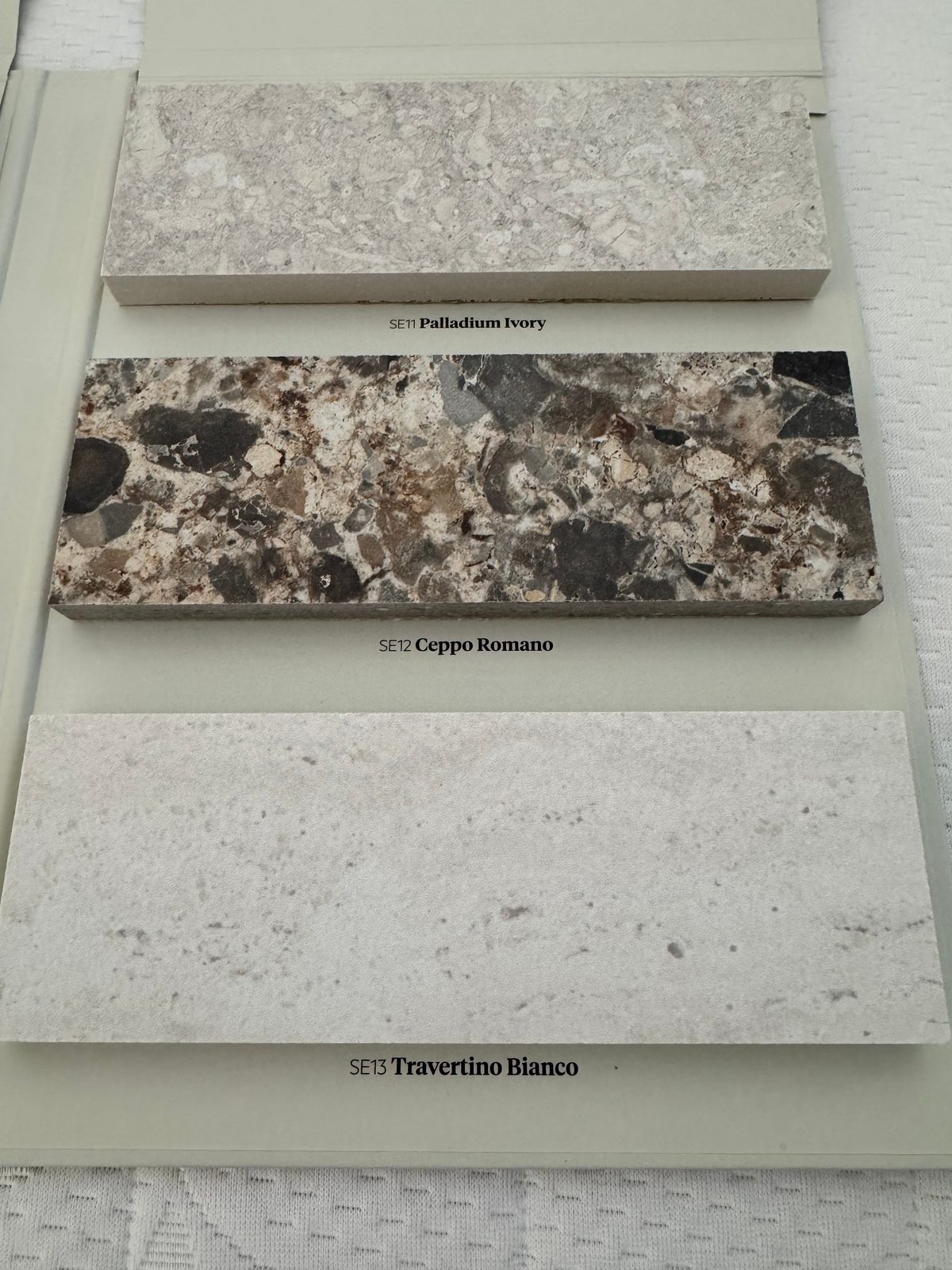
Popular materials for a custom dining table are: solid oak, walnut, HPL (very scratch-resistant) and ceramic (heat-resistant and stain-resistant).
Step 5: Choose the base
The base partly determines how much legroom there is and what the table looks like. The most chosen options are:
- 4 legs: classic and stable, but pay attention to the position - for 8 people, the outer legs should not be too far towards the center.
- U-frame or H-frame: more legroom, ideal for long tables. Popular in industrial design.
- Center leg or T-shape: maximum legroom, but less stable under heavy load.
- Solid wooden block leg: monumental and strong - suits a robust dining area.
Order a custom dining table at Industrial Home
At Industrial Home, custom work is the standard, not the exception. We hand-make every custom-made dining table, tailored to your wishes. From the smallest details in the wood to the color of the frame - you choose, we build.
Read more on our custom dining table page or use our interactive table configurator to directly compose your dream table. Do you have questions? Our specialists are happy to help you make the right choice. Also view our complete collection of dining tables for inspiration.