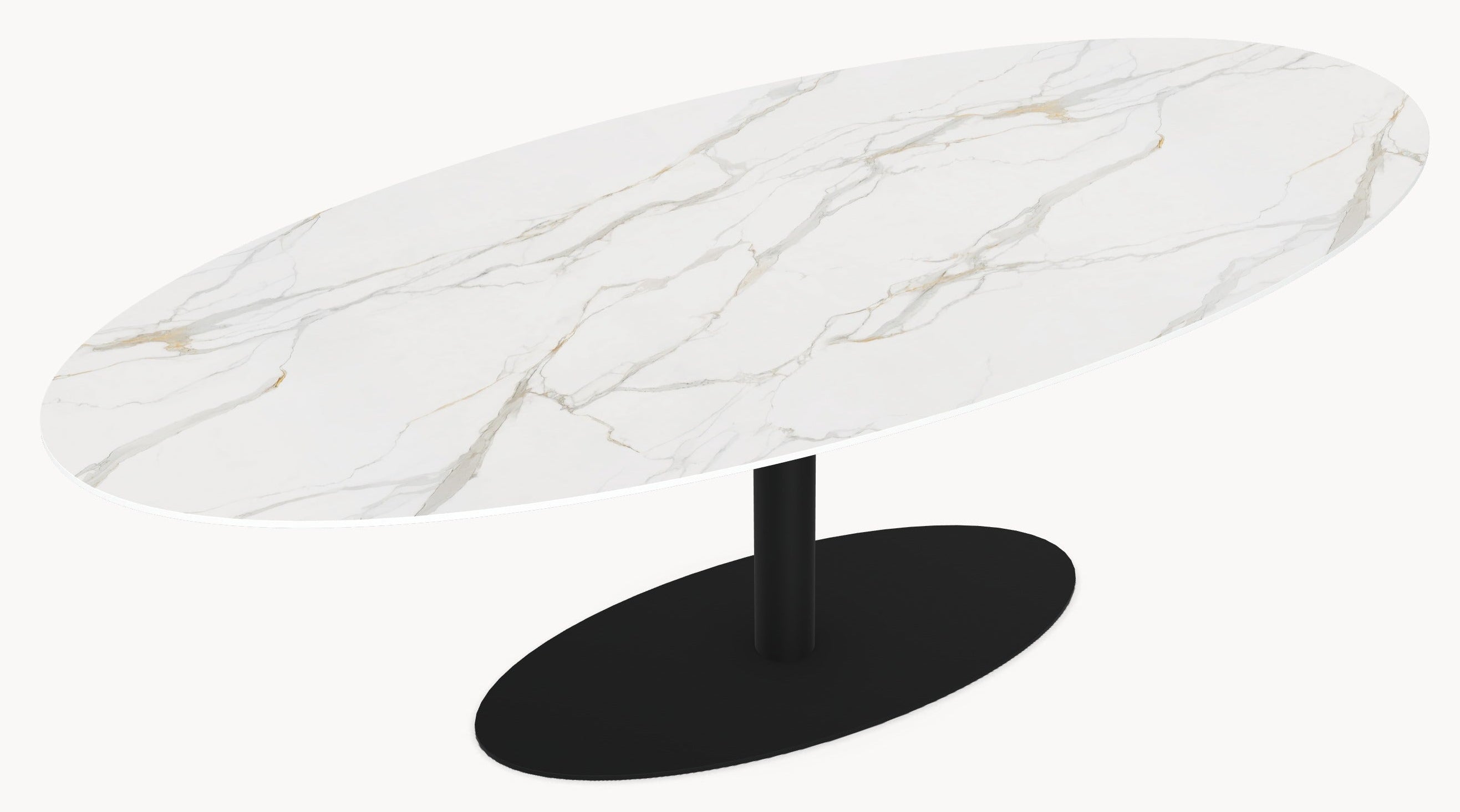
Rond
Rond
 Organisch Rond
 Vierkant
 Ovaal
Ovaal
 Deens Ovaal Recht
 Deens Ovaal Rond
 Half Ovaal
 Plat Ovaal
 Rechthoek
 Kiezel
 Organisch
 Boomstamrand

HPL vs Ceramic Tabletop - what's the difference and which is right for you?
Written by Erik Tobben - Founder & Furniture Expert, Industrial Home
Are you looking for a new dining table and torn between an HPL tabletop or a ceramic tabletop? You're not alone. Both materials are popular, durable, and available in countless finishes - but they fundamentally differ. In this article, we'll neatly lay out all the facts so you can make the best choice for your dining room.
What is HPL?
HPL stands for High Pressure Laminate. It is a composite material made of multiple layers of resin paper pressed together under high pressure and temperature. The result: an extremely sturdy, matte, and uniform tabletop that strongly resembles concrete, stone, or wood - but without the disadvantages of those materials.
HPL tabletops are particularly popular in the hospitality industry and professional environments, precisely because they are so robust and easy to maintain. Think of the hard, industrial look you see in modern cafes and restaurants. The material does not shrink, expand, and is resistant to moisture - ideal properties for a tabletop that is used daily.
What is ceramic?
A ceramic tabletop is made of sintered porcelain or earthenware, fired at very high temperatures. This process creates an incredibly hard and dense surface that is resistant to almost all external influences. Ceramic is often used as a finishing touch for interiors that need to exude a luxurious and refined feel, with beautiful marble, concrete, or high-quality natural stone imitations.
Modern ceramic for dining tables is typically only 6 to 12 mm thick but extremely strong. The surface is completely non-porous: liquids and stains cannot penetrate. Ceramic is also UV-resistant - the color does not fade over the years.
Comparison Table: HPL vs Ceramic
| Property | HPL | Ceramic |
|---|---|---|
| Scratch resistance | Good - resistant to daily use | Excellent - virtually unscratchable |
| Heat resistance | Moderate - always use a coaster | Excellent - resistant up to 300°C+ |
| Price | Affordable to mid-range | Mid-range to premium |
| Maintenance | Minimal - wipe with a damp cloth | Minimal - waterproof and stain-resistant |
| Weight | Light to medium | Heavy |
| Appearance | Industrial, matte, uniform | Luxurious, stone-like, marble or concrete look |
| Impact resistance | Good - flexes slightly | Can crack with heavy direct impact |
| UV resistance | Good | Excellent - does not fade |
When to choose HPL?
HPL is the ideal choice if you value a sleek, matte, and industrial tabletop with a true hospitality look. The material is particularly suitable for people who use their dining table intensively daily - with children, pets, or regular dinner parties.
- You're looking for a modern or industrial interior - HPL pairs perfectly with concrete, steel, and dark wood
- You want a smooth, uniform surface without veins or patterns
- You have a friendlier budget but refuse to compromise on quality or style
- Your table needs to withstand intensive daily use (children, hospitality-like use)
- You want a lightweight tabletop that is easy to move during renovations or relocation
- You like a matte, light-absorbing surface that doesn't show fingerprints
HPL fits excellently in an industrial, modern, or Scandinavian interior. The matte finish reflects no light, creating a calm and sober atmosphere. At Industrial Home, HPL is available in a wide range of colors and finishes, from anthracite to cream and from concrete look to wood decor.
👉 Discover all HPL dining tables at Industrial Home
When to choose ceramic?
A ceramic tabletop is the best option if you want to invest in long-lasting luxury and maximum ease of use. Ceramic offers the visual richness of marble or natural stone, but without the associated maintenance.
- You want a luxurious, exclusive look such as a marble look, travertine, or limestone imitation
- You use your table intensively: hot pans, wine bottles, heavy objects - no problem for ceramic
- You never want to give stains, moisture, and bacteria a chance - ceramic absorbs absolutely nothing
- You are making a timeless investment that will last decades without yellowing or discoloration
- Hygiene is paramount - ceramic is antibacterial and food-safe
- You live in a modern, Mediterranean, or luxurious interior that wants to make a statement
Ceramic has a premium look that perfectly suits high-end living spaces and open kitchen-living room combinations. The subtle veins and depth give each tabletop a unique, almost organic character. At Industrial Home, ceramic tabletops are available in various sizes, thicknesses, and patterns - from white Carrara-look to dark Noir Saint Laurent.
👉 Discover all ceramic dining tables at Industrial Home
Our conclusion: what suits you?
Choose HPL if you like a matte, industrial look, have a tighter budget, or want to use your table heavily without worries. Choose ceramic if you dream of a luxurious stone-like appearance, want maximum heat resistance, or are looking for a table that will last decades without any maintenance.
Both options at Industrial Home are fully customizable: you choose the size, color, base, and finish. Our 3D configurator shows you exactly what your table will look like - even before it's made.
🛠️ Design your custom dining table
HPL or ceramic - at Industrial Home, you can configure it completely in 3D. Choose your dimensions, material, color, and base and watch your dream table come to life in real-time.
Also read
- HPL tabletop: low-maintenance and durable
- Ceramic dining tables: scratch-resistant, heat-resistant, and always beautiful
- View HPL dining tables
- View ceramic dining tables
See everything live in our showroom in Beusichem
Prefer to see before you decide? In our showroom in Beusichem, you can see, touch, and compare live: dining tables, chairs, coffee tables, armchairs, bar tables, bar stools, dining benches, and various bases. Everything is set up as it would be in a real interior.
The showroom can be visited by appointment - so you get all the attention and time to choose calmly.