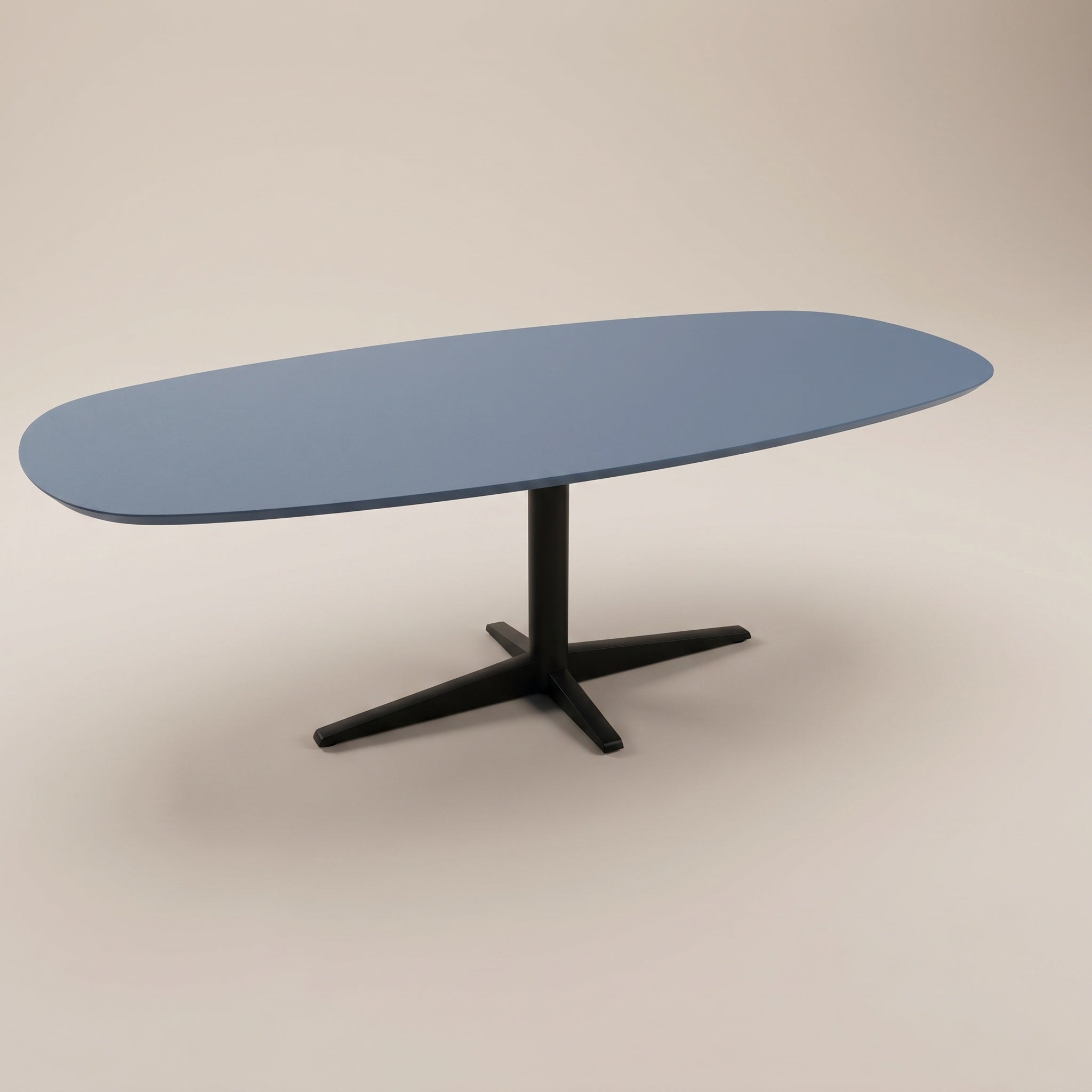
Rond
Rond
 Organisch Rond
 Vierkant
 Ovaal
Ovaal
 Deens Ovaal Recht
 Deens Ovaal Rond
 Half Ovaal
 Plat Ovaal
 Rechthoek
 Kiezel
 Organisch
 Boomstamrand
What is travertine? All about the stone, its maintenance and its look
Travertine is appearing everywhere: in bathrooms, on windowsills, and especially as a dining table top. But what exactly is travertine, where does it come from, and is it practical in the home? In this article, you’ll learn all about this natural stone, including its pros and cons, and a low-maintenance alternative.
What is travertine?
Travertine is a natural limestone formed by hot springs. As mineral-rich spring water cools, lime (calcium carbonate) precipitates layer by layer. Gases escaping during this process leave behind small cavities, and it is precisely these pores that give travertine its recognizable, slightly grooved texture.
The stone has a warm, earthy color: from cream and beige to soft gray and walnut tones. No two slabs are alike; each one shows its own pattern of layers and pores.
Where does travertine come from?
The most famous travertine comes from Tivoli, near Rome. The Romans used it to build the Colosseum, among other structures, which still stands after nearly two thousand years. Today, travertine is still quarried in Italy, Turkey, and Iran. This classic origin explains why travertine is so strongly associated with Mediterranean, timeless interiors.
Why is travertine so popular in interior design?
Travertine fits perfectly with current major living trends. In a Japandi or Wabi-Sabi interior, the stone provides calm and natural texture. In a Mediterranean or organic interior, the warm beige tone instantly brings ambiance. Unlike high-gloss marble, travertine appears understated and soft, making it effortlessly combine with wood, linen, and bouclé.
The disadvantages of real travertine
As beautiful as the stone is, it is also very demanding. Keep the following in mind:
- Porous and stain-prone. Its open structure absorbs moisture. Wine, coffee, oil, or lemon juice can cause permanent stains or dull spots.
- Regular sealing. A travertine surface needs to be treated once or twice a year to prevent stains.
- Scratch-sensitive and acid-sensitive. Acidic cleaning products will damage the stone; only pH-neutral cleaners are safe.
- Heavy and expensive. A solid stone tabletop can easily weigh 80 to 120 kilograms, and real natural stone comes with a hefty price tag.
For a windowsill or bathroom, this is perfectly manageable. But a dining table is exposed to daily food, drinks, and hot pans, and it is precisely there that the vulnerability of real stone becomes apparent.
The alternative: travertine-look ceramic
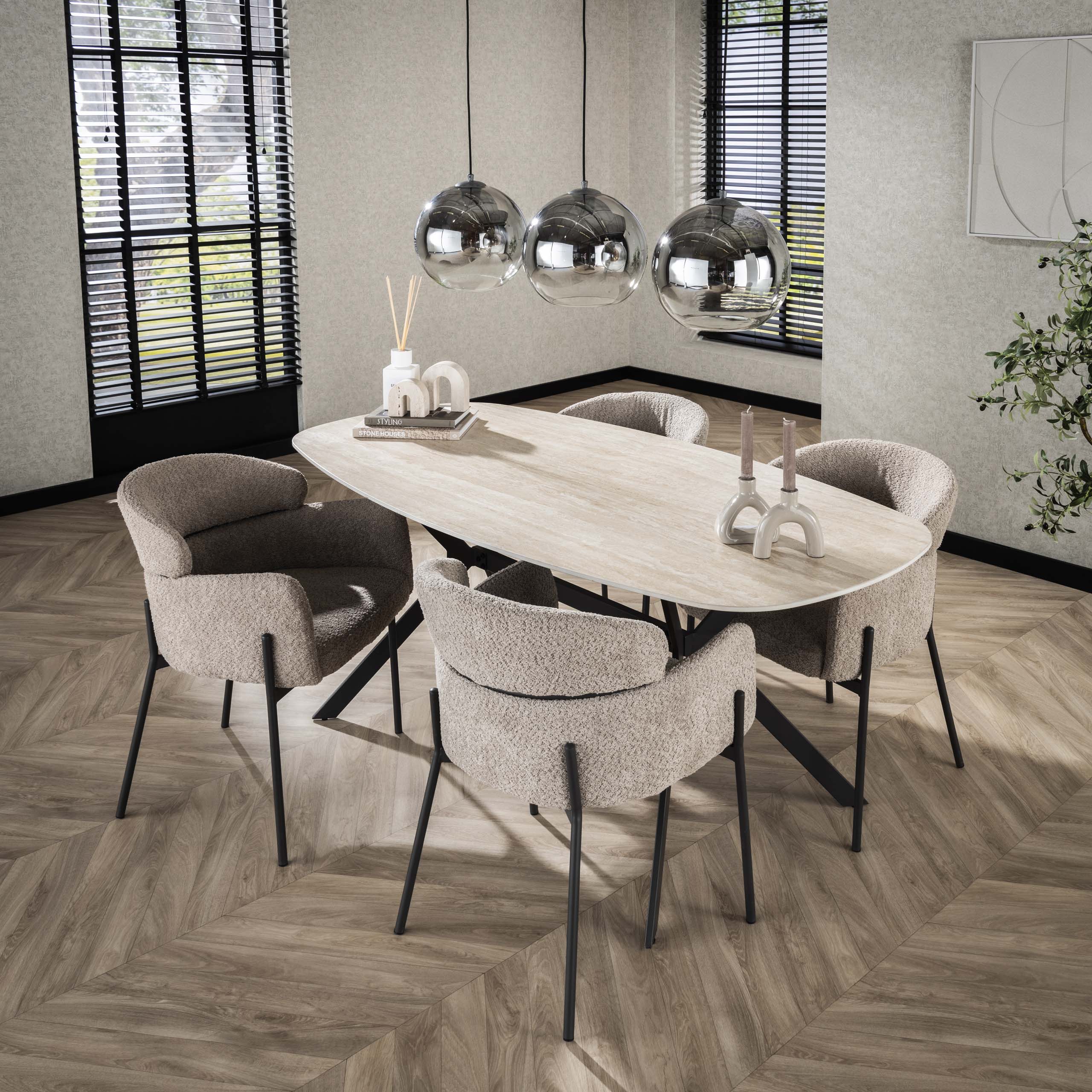
If you want the look of travertine without the maintenance, a ceramic tabletop with a travertine look is the smart choice. Ceramic is fired at high temperatures, making it completely non-porous: it is heat-resistant, scratch-resistant, and stain-resistant. A hot pan, a glass of red wine, or a lemon: the surface will not be affected. Sealing is never necessary; a damp cloth is enough.
At Industrial Home, you'll find the travertine look in the Romano series: travertine dining tables with the warm beige tone and subtle pore structure of real stone, but in durable ceramic. Available as a straight dining table, with curved edges, round, or kidney-shaped, from 140 to 215 cm.
Custom travertine dining table
Are you unsure about the right size or shape? With our 3D configurator, you can design your own dining table and immediately see what the top will look like. This way, you can be sure that the dining table fits your space, down to the centimeter.
Frequently asked questions about travertine
Is travertine the same as marble?
No. Both are types of limestone, but marble is transformed (crystallized) under pressure and heat and has a smooth, often veined structure. Travertine forms near springs and has an open, porous structure with a more matte appearance.
How do you maintain travertine?
Real travertine should only be cleaned with pH-neutral products and sealed once or twice a year. Travertine-look ceramic requires no maintenance: cleaning with a damp cloth is sufficient.
Is a travertine dining table practical?
A dining table made of real travertine is susceptible to stains and acids and requires careful use. A ceramic dining table with a travertine look offers the same aesthetic and can withstand daily use.
How much does a travertine dining table cost?
Solid travertine typically starts around 1,500 to 2,500 euros. Travertine-look ceramic is more affordable: at Industrial Home, from 399 euros for a 180 cm dining table.